The way of beingEternal. Universal.
What is Dharma? It is the living science of consciousness, ethics, and the cosmos. The most complete framework of life. Learn moreIt belongs to no one. It is available to everyone.
“Yoga is equanimity of mind in success and failure.”
Bhagavad Gītā 2.48
समत्वं योग उच्यते
Today in Dharma — Monday 19 October 2026
Today
Monday
19 October 2026
सत्यमेव जयते
“Truth alone triumphs.”— Muṇḍaka Upaniṣad 3.1.6
Verse of the Day
अद्य पाठः
The Scale of Dharmic Civilisation
0+
Years of Continuous Civilisation
The oldest unbroken living intellectual tradition on Earth
0M+
Sanskrit Manuscript Pages Survive
The world's most precisely engineered language
0B+
Living Practitioners Worldwide
Across every continent, every discipline, every age
0
Disciplines in the Ākāśa Library
From quantum physics to sacred architecture
Four Sacred Traditions
Unified by Dharma
Hinduism, Sikhism, Buddhism, and Jainism — distinct paths rooted in the same civilisational soil
Hinduism
हिंदू · Hindū
The eternal dharma — Vedas, Upanishads, and the living temple tradition spanning 5,000 years
Sikhism
सिख · Sikh
Equality, justice, and the sword of wisdom — founded by Gurū Nānak in the 15th century
Buddhism
बौद्ध · Bauddha
The path of enlightenment — compassion and the Middle Way across Asia and the world
Jainism
जैन · Jain
Non-violence perfected — the path of the Tīrthaṅkaras and the conquest of the soul
Precision of Language
Why Dharma,
not Hinduism.
The "-ism" suffix in Hinduism imports Western assumptions about religion: a founder, a fixed text, exclusive truth-claims, centralised authority. None of these apply. Choosing the word "Dharma" is not pedantry — it is philosophical precision.
Dharma is not
Dharma is
The Living Platform
Explore Our Dharma.
Four interconnected dimensions — each designed to illuminate, never to indoctrinate.
Dharma is for everyone
Voices of Recognition
The World's Greatest Minds
on Dharmic Wisdom
"Access to the Vedas is the greatest privilege this century may claim over all previous centuries."
Oppenheimer's Sanskrit studies (1933-1945) under Arthur Ryder at UC Berkeley are documented in Berkeley registrar records and Oppenheimer Papers (Library of Congress). His Trinity observation (16 July 1945) and the Gītā 11.32 reference are confirmed in interviews (1965 for TV documentary, transcript in LOC). His Sanskrit reading notebook and annotated Gītā edition are in the Oppenheimer Estate. He listed the Gītā among his 'ten most important books' in a 1958 interview. His Los Alamos colleague Enrico Fermi documented Oppenheimer's Sanskrit quotations. The Vedas reference appears in his 1955 Reith Lecture 'Science and Common Understanding.' Scholarly sources: Hijiya (2000), Bird & Sherwin (2005).
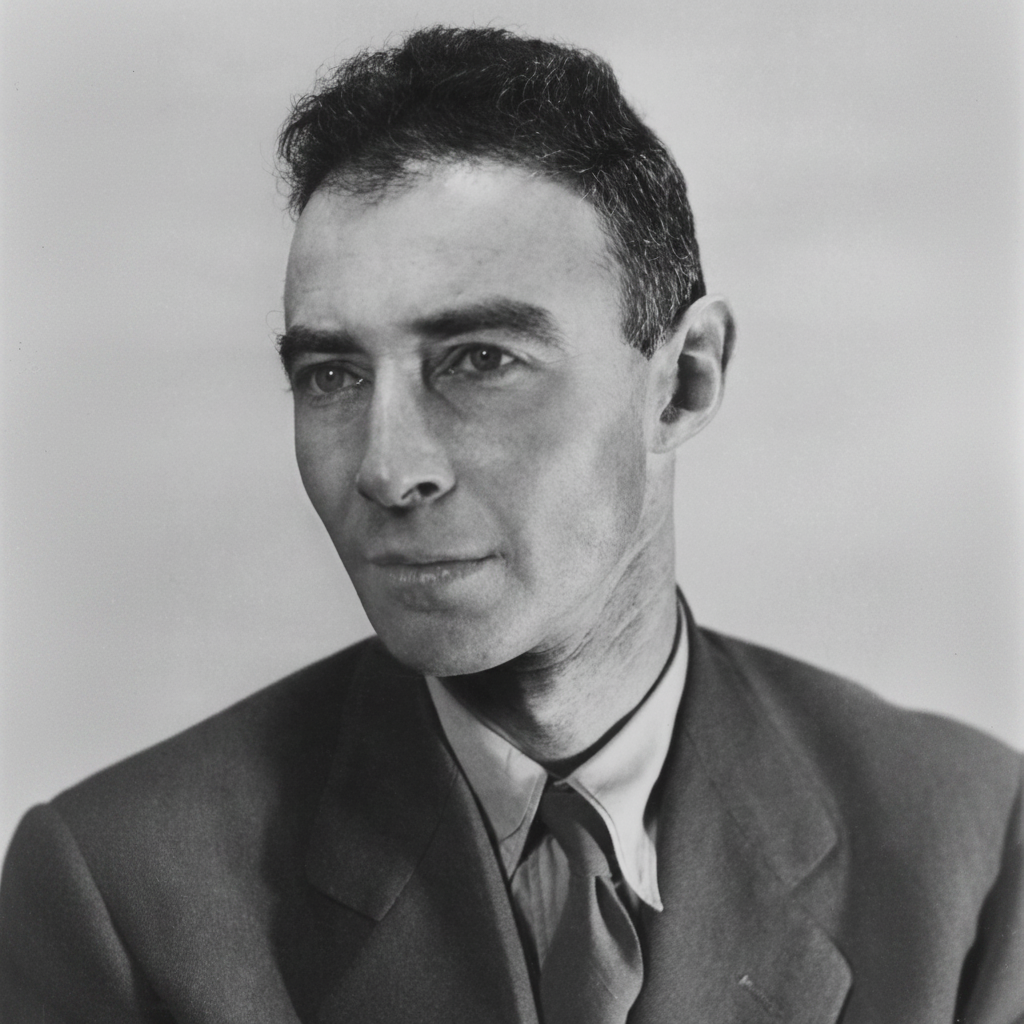
J. Robert Oppenheimer
Director of the Manhattan Project. Studied Sanskrit at Berkeley to read the Gītā in the original. · 1904–1967
The Living Manifesto
Eight Principles That Separate
Dharma from Everything Else
Not commandments. Observations about the nature of reality — refined over 5,000 years of uninterrupted civilisational inquiry. Click to unveil.
Eternal, Not Founded
अनादिTap to unveil →
Realisation, Not Belief
अनुभवTap to unveil →
Universal, Not Ethnic
सार्वभौमTap to unveil →
Science of Consciousness
चित्त-विज्ञानTap to unveil →
Ecology as Theology
भूमि देवीTap to unveil →
Plural Without Relativism
अनेकान्तTap to unveil →
Decolonial by Nature
स्वतन्त्रTap to unveil →
Ethics Without Commandments
धर्मTap to unveil →
Choose your door
Three ways to begin.
Every seeker arrives differently. Dharma meets you where you are — through feeling, through reason, or through practice.
Every door opens onto the same temple.
The eternal foundation you already carry
This is not a new ideology.
It is the oldest truth.
Division grows. Ancient wisdom fades. Yet the truth remains eternal: there is a natural way of living — called Dharma — that transcends every label, sect, and nation.
It is not a religion to be defended. It is a truth to be lived. And it belongs to everyone. Including you. Right now.
"Beyond sects, beyond colonially created divisions, there is one Dharma. You are its living heirs."
Our Dharma · Supreme Civilisational Council